The coordinated development of energy storage and photovoltaic power solves the problem of clean energy absorption.
2025/12/6
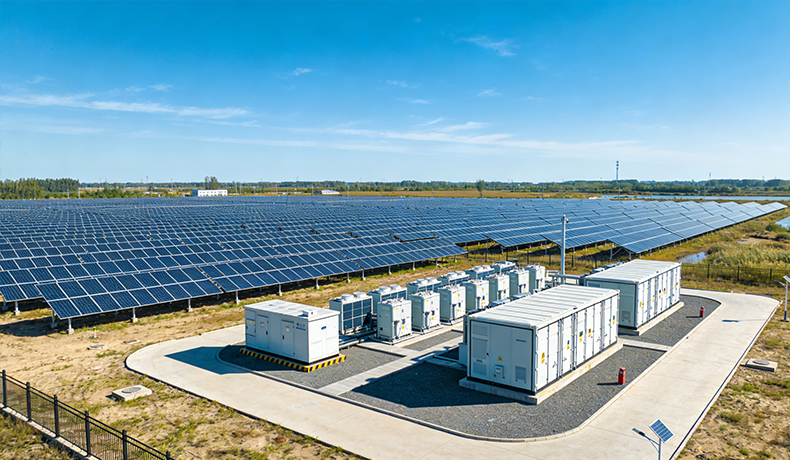
The intermittency and volatility of photovoltaic (PV) power generation have long been one of the major challenges to its large-scale grid connection. The rapid maturity of energy storage technology and its in-depth integration with PV systems are effectively addressing this issue, constructing a new "PV-storage integration" energy solution. This provides key support for the grid connection of high-proportion renewable energy and has become an indispensable technical path for promoting energy transition.
The core value of PV-storage coordination lies in realizing temporal and spatial energy transfer and active power regulation. PV power generation peaks during the daytime when sunlight is abundant, but electricity demand may not be synchronized. Energy storage systems (such as lithium-ion batteries and flow batteries) can store surplus electricity during peak generation periods and release it at night, on rainy days, or during peak electricity demand hours. This significantly improves the self-consumption rate of PV power, reduces reliance on the power grid, and mitigates fluctuation impacts. For large-scale ground-mounted power plants, the "PV + energy storage" configuration can effectively smooth the output power curve, reduce instantaneous impacts on the grid, and meet grid connection technical requirements. Meanwhile, under grid dispatching instructions, energy storage units can also provide auxiliary services such as peak shaving and frequency modulation, enhancing the stability and flexibility of grid operation.
Improved economics is the driving force behind the accelerated implementation of PV-storage coordination. The cost of energy storage systems, especially lithium-ion batteries, has continued to decline over the past period. At the same time, the widening peak-valley electricity price difference, deepening power market reforms (such as allowing energy storage to participate in power market transactions for revenue), and electricity price subsidies or priority grid connection policies for energy storage configuration in some regions have significantly optimized the economic model of PV-storage projects. In residential scenarios, household PV systems equipped with energy storage can maximize the use of self-generated power, significantly reduce high-priced electricity purchases, and further shorten the investment payback period. In industrial and commercial scenarios, the combination of PV and energy storage helps enterprises reduce demand charges, ensure the continuity of power supply for critical loads, and achieve a win-win situation in terms of economy and reliability.
Technological integration and system intelligence are key to coordinated development. Advanced Energy Management Systems (EMS) act as the "brain," optimally dispatching PV power generation, battery charging and discharging, and grid interaction based on power generation forecasts, load forecasts, and electricity price signals to maximize overall system benefits. The modular and standardized design and installation of energy storage products also make PV-storage system integration more convenient and efficient. Globally, practical cases of PV-storage coordination are increasingly abundant, with application scenarios continuously expanding—from household PV-storage systems widely used in German households to centralized energy storage power plants supporting large-scale PV bases in northwest China, and intelligent microgrids in industrial and commercial parks.
Of course, the in-depth development of PV-storage coordination still needs to overcome some practical challenges. Continuous attention should be paid to the safety standards, service life, and recycling of energy storage systems themselves. Further improving system cycle efficiency and reducing the whole-life cycle cost are common goals of the industry. Business models adapting to different application scenarios and technical routes (such as lithium-ion batteries, flow batteries, and compressed air energy storage) need to be explored and innovated. Grid connection rules and power market mechanisms also need to be continuously improved to adapt to new types of systems.
Nevertheless, the strategic significance and practical value of PV-storage coordination have been widely recognized. With the iterative upgrading of energy storage technology, continuous cost reduction driven by large-scale application, and the gradual improvement of power market mechanisms, the economics and competitiveness of PV-storage integration solutions will continue to enhance. It is not only the "key" to solving the problem of PV power absorption but also a core element in building a new power system dominated by new energy, providing solid and reliable technical support and development paths for the clean, low-carbon, and intelligent transformation of global energy.

SG Solar copyright {Disclaimer}
Region contact:Charles McGlinchey
Email:charlie.mcglinchey@sungrow-re.com
Phone number:0484 296 535
Address: Chadstone Tower 1 Level 8, 1341 Dandenong Road, Chadstone, VIC, 3148
Technical Support:IBW(www.ibw.cn)