The investment return rate of residential photovoltaic (PV) systems is increasing, while the installation cost continues to decrease.
2025/12/6
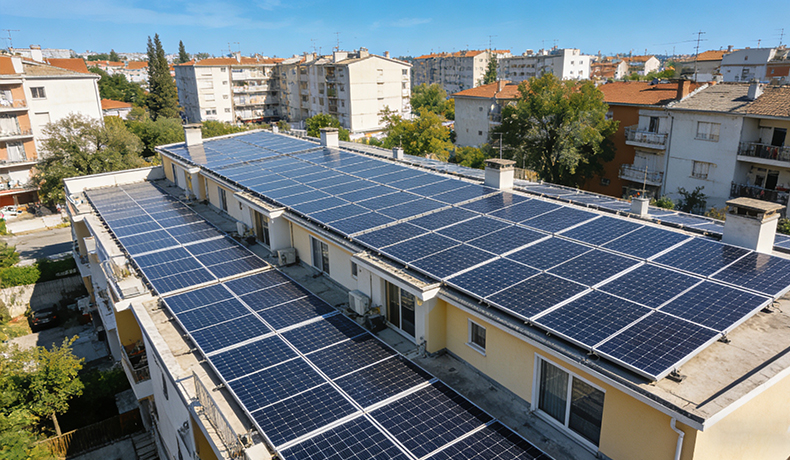
Driven by multiple factors including technological progress, economies of scale, and policy support, the economics of residential rooftop photovoltaic (PV) systems are undergoing significant optimization. The reduction in initial investment thresholds and the enhancement of long-term profitability have transformed residential PV from a purely environmental choice into an increasingly attractive economic investment, accelerating its penetration into ordinary households.
The decline in system costs is a key driver behind the improved return on investment. As core components, PV modules have seen a continuous downward trend in market prices over the past period, mainly due to the maturity of manufacturing processes, the expansion of production capacity, and the rationalization of costs for raw materials such as silicon. Meanwhile, the prices of supporting equipment such as inverters, brackets, and cables have also become more favorable due to technological advancements and market competition. The standardization and efficiency improvement of the installation process have further reduced the initial investment in the overall system. As a result, the total investment required for rooftop PV systems of the same installed capacity is now significantly lower than before.
Positive changes on the revenue side are equally notable. On one hand, the tiered structure and overall level of residential electricity prices have made the value of self-generated PV power replacing high-priced grid power more prominent, with directly saved electricity bills forming a stable source of income. On the other hand, the continued or updated policies for feeding surplus electricity into the grid in various regions ensure that households can feed excess PV power into the grid at reasonable prices, generating additional income. More importantly, the popularization of high-efficiency modules (such as N-type batteries) and optimized system design have increased photovoltaic power generation per unit area, further amplifying the aforementioned benefits. The optional addition of energy storage systems enhances economics by increasing the self-consumption rate and optimizing peak-valley electricity price arbitrage.
Continuous policy support provides stable expectations. Although specific implementation details may adjust, the national strategic direction of encouraging the development of distributed PV and supporting energy transition is clear. The existence of some local subsidies, tax incentives, or green financial products (such as PV loans) has also reduced users' initial capital pressure or financing costs to varying degrees, indirectly shortening the investment payback period.
Of course, the return level of residential PV is affected by multiple factors such as geographical location (solar resource conditions), roof conditions, local electricity price policies, and users' electricity consumption habits, leading to variations in performance. In regions with abundant solar resources and high electricity prices, the investment payback period is often more favorable. At the same time, users' choice of high-quality equipment and professional installation and operation and maintenance services are important prerequisites for ensuring the long-term stable operation of the system and the realization of expected returns.
Overall, the economic model of residential PV systems is becoming clearer and more positive. The continuous optimization of costs and the diversification of revenue streams have jointly driven the improvement of investment return rates. With the continuous iteration of PV technology, the deepening maturity of the industrial chain, and the improvement of user awareness, residential rooftop PV is expected to demonstrate good economic value in a wider range of regions. This not only promotes the popularization and application of green energy but also provides residents with an effective way to participate in energy transition and achieve long-term energy conservation and cost reduction, aligning with the trend of sustainable development.

SG Solar copyright {Disclaimer}
Region contact:Charles McGlinchey
Email:charlie.mcglinchey@sungrow-re.com
Phone number:0484 296 535
Address: Chadstone Tower 1 Level 8, 1341 Dandenong Road, Chadstone, VIC, 3148
Technical Support:IBW(www.ibw.cn)